https://encrypted-tbn0.gstatic.com/images?q=tbn:ANd9GcQZiBCVi8tAHG_eCDdSBcuAFahAgtrgWFO8FYU2CkzpxM00yYG3aA

http://www.cardinal-creations.com/8-major-site-modules/8-detailed-billiment-construction
http://www.thefashionhistorian.com/2011/11/ruffs.html
Q: Name three technological advances that changed clothing from the Renaissance – either manufacture or otherwise. How did they affect clothing styles? Has there been a technological advance that has affected 21st century clothing?
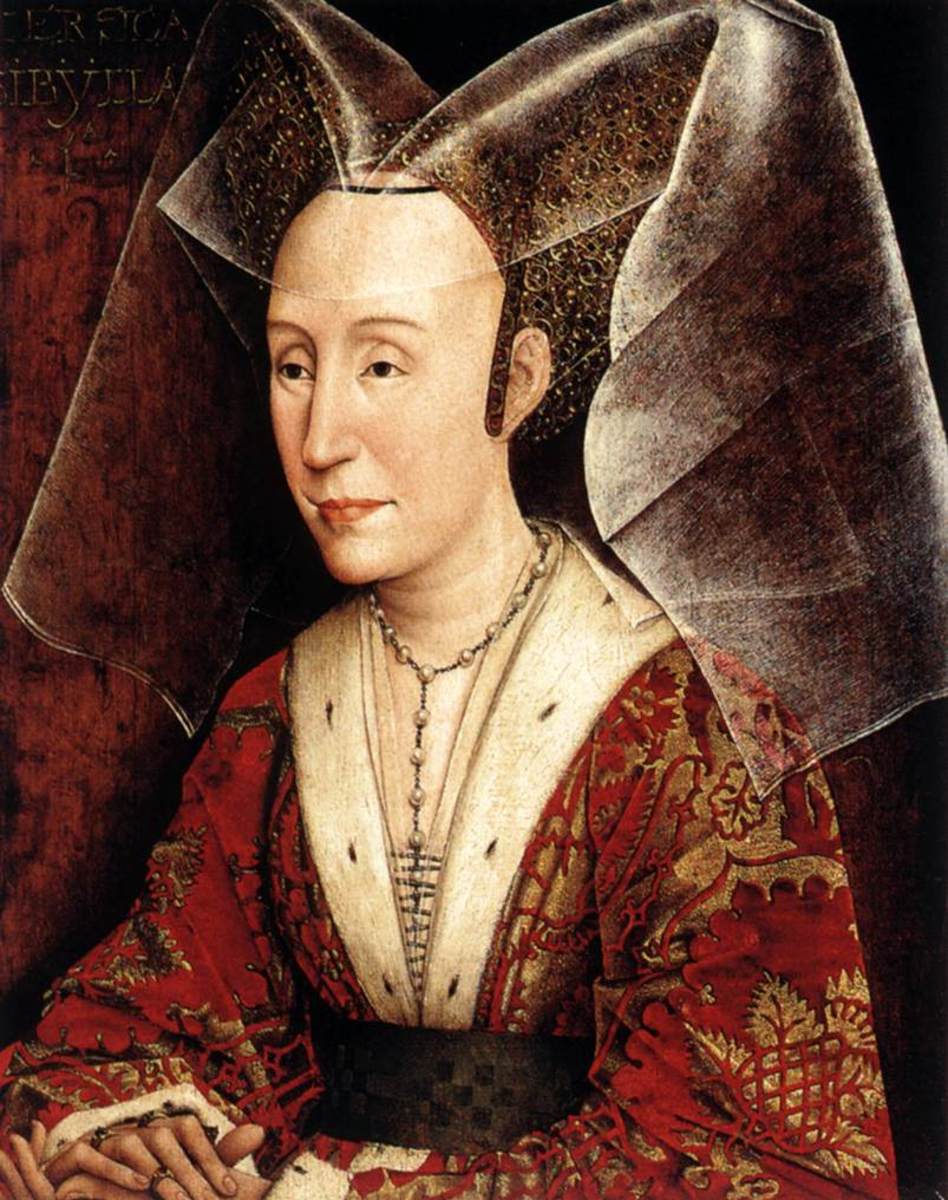
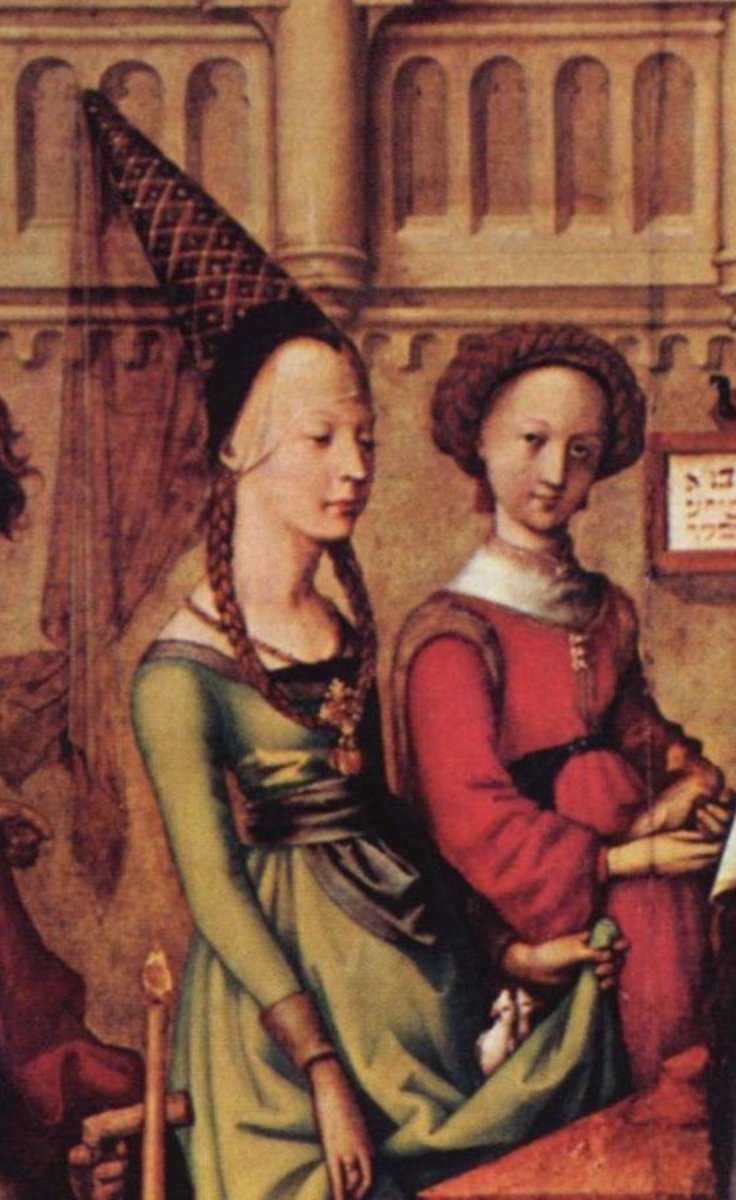
One large deveolpment was Humanism. Cicero’s premise that man was a dignified rational being, it allowed individuals became more self-aware and extrovert. This led to the discovery that the human body represented beauty and proportions in nature; clothes sought to conform to mans proportions.
Second, the textile industry blew up. The workers and technology advanced and became more skilled. This caused more elaborate fabric with delicate clothing. And now, rare things like silks and velvets were made all over Europe.
Lastly, the artistic and commercial forms of lace developed as an industry. This led to Venetians which were “delicate and exquisite laces, the intricate patterns of which (were) incorporated in their textiles.” We then saw the Italian Merletto or the German spitze or the French Dentelle.
I think the most similar example of this in the 21st century is fast fashion. We are now able to keep up with the mainstream trends regardless of our class. However, these clothes are extremely cheap so you can’t wear them for a long time or they will rip or break down. I personally believe this is a huge reason why people don’t want to be “outfit repeaters” (shout out to Lizzie McGuirre). The industry has turned us into people who want new clothes often for fear of being caught in the same clothes and not being able to keep up with trends.

:max_bytes(150000):strip_icc()/GettyImages-1071351204-5c7eb73046e0fb00018bd8b7.jpg)

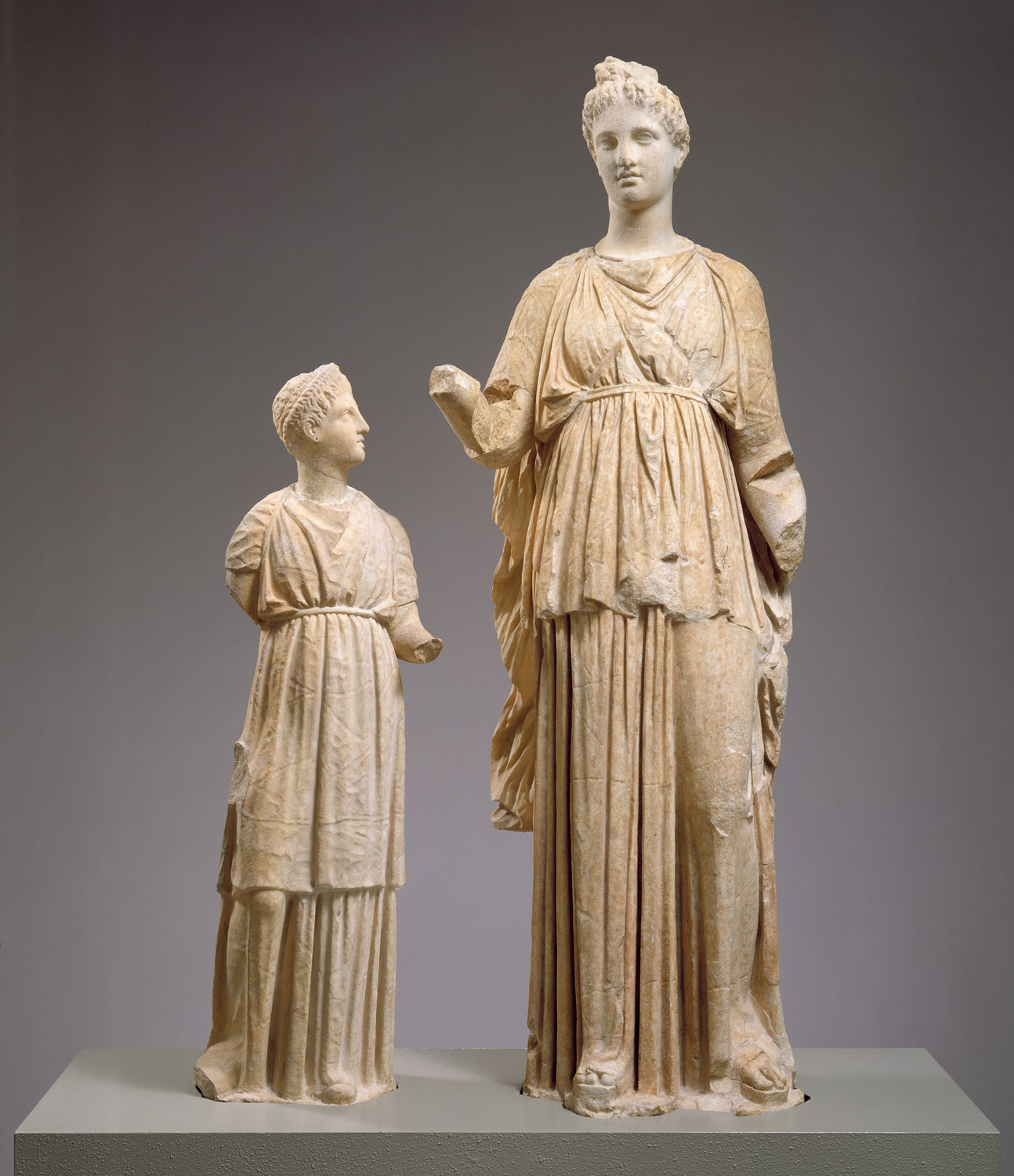
As we will see over and over again, clothing is a link to the larger spirit of the culture and society. What are we seeing reflected in the various eras of Ancient Greek clothing?
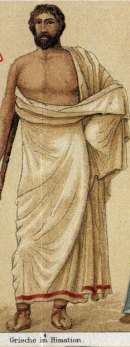
In the early ages of Greek fashion, we saw quite a lot of stiff, decorative, very fancy clothing. However, as time goes on, we see a huge simplification of clothing there was almost no sewing – they ended up as clothing resembling large sheets draped loosely around the body. And again they changed slightly as time went on and started fasten it with rope (chiton) or fibula (Chlamys); depending on social status.
Also, Greeks eventually became interested in their appearance. In the early eras greeks wore very little make up but as the years went on almost everyone wore makeup aside from lower class women. They held high importance in hair styles, they cut it off and gave it to corpses, brides cut it to show they were not vain, and young boys would not cut it until they grew facial hair because beards held very high importance as well. This was not only seen in the male gender. Women also cut their hair when getting married as a sign of humility.
Q: What are some of the differences between Egyptian and Mesopotamian styles? Especially think material, ornament, and style of garment. What are the reasons for these differences?
One of the first and main differences between Egyptian and Mesopotamian styles were the types of fabrics Egyptians mainly wore linen to keep them cool and Mesopotamians mainly wore what is assumed to be wool which was a new and important piece of period style. There is no way to truly tell if this was actually wool because all of the clothing was destroyed so we only have sculptures and some paintings to go off of.
Another difference is facial hair. The Egyptians were extremely concerned with being clean – both their bodies and clothes. To the Egyptians, an abundance of facial hair was a sign of being unclean or self-neglect. The only exception was a very thing mustache or goatee. On the flip side, Mesopotamians had very long manicured beards. It is quite possibly again about Egyptians desire to stay clean and cool.
Lastly, I would like to talk about jewelry. Both Egyptians and Mesopotamians wore a lot of jewelry, however they looked quite different. Mesopotamian jewelry often had leaves, cones, spirals, and bunches of grapes where as Egyptian jewelry on the other hand expands beyond the necklaces to pectorals, crowns, elaborate headdresses. Both cultures were concerned with decoration but the Egyptians were more so concerned with appearance which could explain why they had more elaborate decorations.
https://www.metmuseum.org/toah/images/hb/hb_44.11.2,.3.jpg
https://www.ducksters.com/history/ancient_greece/clothing.php

Q:
So we’ve looked at a bunch of ways to make fiber and fabrics by hand and by machine. In our age of mechanization and fast fashion, why would anyone spin, weave, sew, or do anything like this by hand? Would/do you? Are there any benefits by making things by hand?
I know this sounds like a loaded question, but I am genuinely curious about your thoughts on handmaking objects that are readily available.
I think that most often, these days, people make clothes/manipulate fabric by hand for two reasons. First, to explore a passion – my best friend from my hometown used to make her own clothes just because. Honestly, the styles were a little weird, but I would have never known that she made them herself. I used to knit as well. I did it because it was a fun skill that not many other people my age enjoyed at the time. I wanted to feel special, I guess. However, as both of us got busier, we both left our passions behind in order to keep up with our school work. The second reason I think people may make their own clothing is financial difficulties. You can get a lot of clothes for a very cheap price these days, however, they are cheap in quality as well. I think this is a good option for those with large families and financial difficulties because they can repurpose old clothing for new fabric AND make clothes of a higher quality than you may find at Forever 21.
Some day, I think I would like to get back into knitting and perhaps learn how to crochet. I used to sew but never enjoyed that too much. I find it extremely relaxing to do this things and believe they are a better use of my time and mind than scrolling on Twitter (which I do not have an account on by the way).
As I mentioned earlier, I think you get a better quality for a lower price. On top of that, you have a great supply of fabrics because one may get sick of a specific item you made, you can repurpose it, to an extent. These are all practical reasons, but I think it is important we do not discount the bettering of ourselves by practicing a skill that doesn’t involve technology; it is important we don’t forget our roots.

http://www.reshafim.org.il/ad/egypt/timelines/topics/clothing.htm

http://www.touregypt.net/egypt-info/magazine-mag07012001-magf3.htm

Question :
Think further into what is taboo for your particular social groups – what could you not wear in the groups you inhabit on campus? Dorm room? Dining hall? Class? Graduation?
What about in your family dynamic? What is taboo to wear around your elders? Family reunions? Church?
Answer this question as your first WordPress blog post. Include one picture of clothing you could not wear to the dining hall.
Answer: In my life, what is taboo for me to wear is different in every situation. I am a co-president of the accounting club so I feel it would be taboo to wear a full on business suit but, also, it would be just as taboo to have stained sweats or pajamas and even worse if it was a bikini. There are not fine lines I must dance between in order to avoid being judged, our peers tend to be more accepting than most other demographics. However, in my dorm room I have much more freedom, I do not share a bedroom. However, I would never sit around my room in formal wear merely because someone could walk in and they would be quite judgmental if I was wearing a fancy gown.
What is more appropriate to wear here at school and among my peers, may not fly at family functions or around elders in general. Whereas my taboos from above came from opposite ends of the spectrum, it is a much finer line with family. I have to be careful how many rips are in my jeans or how tight my shirt is to avoid comments from my dad or grandma. I could be dressed in jeans and a t-shirt, something I mentioned would be acceptable at school and even leading a club meeting. However, if I happen to have one too many rips on my pants… I am a floozy. My family, especially my grandma, is very Catholic. Luckily, they are not very judgmental but if I showed up to my parents before church in something other than my Sunday best I would be told to change or would not be allowed to go. At the fanciest, I could wear a high necked, knee length dress. At my most casual, I could wear a dark pair of jeans and a fancy sweater or blouse.

 SDoerfert THEA 237 - HoCaF